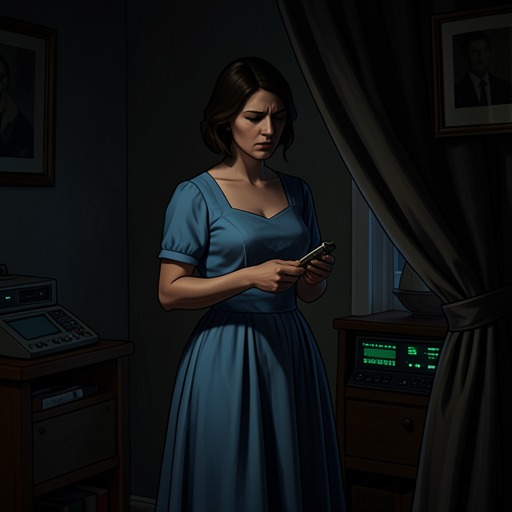
Insomnia
Box Set: Samsons Sterbliche Geliebte & Samson's Lovely Mortal (Deutsch·Englisch) (Scanguards Vampire) (German Edition)Insomnia becomes a persistent disturbance in Delilah Sheridan’s life after she arrives in San Francisco: a woman who once slept easily almost anywhere finds herself dreading bedtime, losing hours to wakefulness, and being jolted awake by dreams that feel more intimate than ordinary exhaustion. The story presents it not as a diagnosed disorder but as an embodied disruption, entangled with her demanding audit and the return of painful memories. Its nights make sleep both a physical need and a threshold she is reluctant to cross.
Onset and Daily Circumstances
Before travelling to San Francisco, Delilah had never had trouble sleeping. She considered herself someone who could sleep anywhere, on almost any pillow—or without one. Now, even a comfortable company-owned apartment and its comfortable mattress do not bring rest. She wonders whether she remains adjusted to New York time, but the explanation is only a possibility; the change began after her arrival, and the narrative does not reduce it to travel fatigue.
Her sleeplessness develops alongside the forensic accounting work that brought her to the city. Late at night, she continues scanning rows of transactions for irregularities, while John Reardon, the branch’s chief accountant, stays in the nearly empty office with her. When he offers coffee, she refuses because she wants to be able to sleep. Her tired eyes and aching neck make the cost of working late visible, yet the audit still holds her attention: she has been instructed to examine not only ordinary accounts but also specific irregularities, and she suspects that the records may reveal something important. The work gives her reason to remain awake, but it does not make the resulting exhaustion voluntary or useful.
The mismatch between bodily fatigue and actual rest becomes explicit at home. After hours spent checking files, Delilah’s eyes hurt so much that she can barely keep them open. She goes to bed expecting the rest she has earned, but cannot settle. The sequence of turning from one side to another, then trying her back and stomach, gives the failure of sleep a repetitive, physical form. Nothing she tries helps.
Nightmares and the Return of the Past
Wakefulness is only one part of Delilah’s troubled nights. She says that dreams have also plagued the little sleep she manages, and that older nightmares have returned after several months in which she had been spared them. They began again within days of her arrival in San Francisco. The recurrence is striking because the remembered dream is not an indistinct fear: it repeatedly returns her to the old French farmhouse where her family lived more than twenty years earlier, when her father had taken a visiting-professor appointment.
The dream’s images arrive as fragments with emotional weight: the lavender fields surrounding the property, a cradle, silence, and her parents’ faces. She remembers tears on her mother’s face and pain. This concentrated sequence does not explain the childhood event at once; instead, it lets the past recur in partial, disturbing impressions. The new dreams that mingle with those familiar nightmares remain, at this stage, beyond Delilah’s understanding. The text therefore makes the return of memory feel less like a clear recollection than an intrusion she cannot yet interpret.
Later, a conversation with her father gives the family history a more definite shape. He tells Delilah that her younger brother, Peter, died of Sudden Infant Death Syndrome, and that neither parent could have prevented his death. Her parents had blamed themselves for leaving her in charge and remembered the horror on her face when she saw him die; they had worried about what witnessing it would do to her. Delilah, meanwhile, had believed her mother’s sadness meant that she was blamed. This disclosure helps explain why the farmhouse, cradle, and her parents’ grief carry such force, without establishing that every dream has a single cause. The insomnia and nightmares return before Delilah can put this history into words; the later conversation changes how the reader understands the pain threaded through the images.
A Night of Fragmented Sleep
One especially vivid night makes the disturbance bodily and immediate. After a frightening attack and her rescue, Delilah tries to redirect her thoughts while soaking in a warm bath. Her body aches with tension, and she focuses instead on the unexpected man who rescued her. The effort to calm herself does not ensure that she will sleep peacefully.
Later, she spends three hours working through downloaded accounting files and eats leftover pasta while the long lines of transactions load. Exhausted, she goes to bed, but wakefulness again takes over. When she finally falls asleep, a frightening sensation breaks into the dark: a weight pressing her into the mattress, hands touching her, lips at her neck, and a hot tongue against her skin. The experience is unfamiliar rather than simply unpleasant, and the scene cuts off at the instant her alarm sounds. She wakes disoriented in daylight and reaches for her neck, but finds smooth, uninjured skin and no blood. The apparent bodily threat has left no wound; she recognizes it as another bad dream.
The sleep she has managed amounts to only three or four hours. Even that short interval does not erase the practical consequences of the night: she has to hurry to the office, where she wants to inspect original documents connected to transactions that do not make sense. At the same time, she notices that she is wearing Samson Woodford’s clothes, which gives her an excuse to hope for another meeting with him. Work, fear, and attraction all press into the morning after her interrupted sleep, but none supplies a remedy for it.
Narrative Significance and Limits
Delilah’s insomnia links two kinds of uncertainty without making them identical. Her audit concerns records whose meaning is not yet clear; her dreams return images whose personal meaning she has not yet recovered. In both cases, she persists through fatigue, attends to fragments, and suspects that something hidden lies behind what she can presently see. The parallel gives the sleepless nights a narrative function, while the concrete details—the late office, the unanswered promise of rest, the cradle and lavender fields, the alarm, and the untouched skin—keep that function grounded in her experience.
The condition also changes how ordinary time feels. A night does not pass cleanly into rest: Delilah cycles through uncomfortable positions, lies awake, dreams briefly, and rises already under pressure to resume her investigation. Her exhaustion is not presented as a failure of effort; she is tired enough to struggle to keep her eyes open, yet sleep does not come when she seeks it. The contrast makes the problem legible as more than a preference to work late.
The evidence establishes recurrence, distress, and disruption, but not a formal diagnosis or a cure. Delilah herself connects the timing first to her recent travel and also recognizes the return of old nightmares; the later disclosure about Peter deepens the context of those nightmares. The narrative thus presents insomnia as a state caught between immediate circumstance and delayed understanding: it affects her present work and rest while carrying traces of a past she has not yet been able to resolve.